
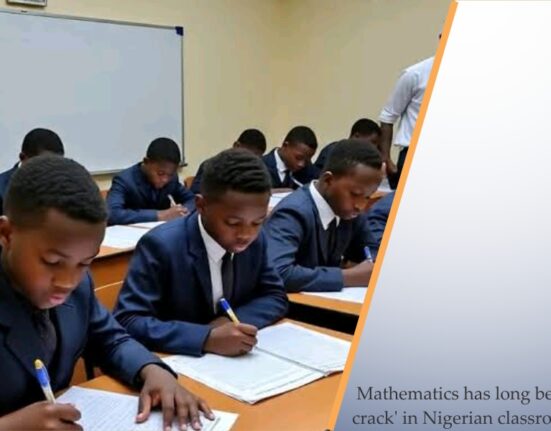
In Yenagoa, Bayelsa State, a young boy named Adonye sat quietly at the back of his classroom for two years. He came to school every day, wore his uniform neatly, and paid attention. However, he could not read even one word. It was not because he was not smart—it was because the way lessons were taught did not help him understand.
Adonye’s story is like that of millions of children across Nigeria. Many go to school but leave without learning to read, write, or do basic maths. The situation is indeed a national crisis, as over 18 million Nigerian children are out of school, a figure perhaps unmatched globally. A study done in 2025 reveals that more than 70% of those aged 7–14 cannot read even a simple sentence.
Experts have said that the problem is not just getting children into school; it is much bigger. It is making sure they learn once they are there. Of course, large class sizes, tired and untrained teachers, and a lack of technology make it hard for children to catch up when they fall behind. In some places, one teacher handles up to 100 pupils, far above the global standard of 1:25.
There is a silver lining in the dark clouds. Some states have now embraced a new teaching model with the help of education partner NewGlobe. This technology-driven model focuses on foundational learning—teaching reading, writing, and maths in the early years. Teachers get electronic devices with lesson guides that match the national curriculum. They are trained and coached regularly, and school leaders can see real-time data about attendance, lesson progress, and pupil performance.
In Bayelsa State, the BayelsaPRIME programme has made a big difference. In just 19 weeks, the number of Primary One pupils who could not read dropped by 20%. Enrolment rose from 25,000 to over 40,000. Teachers now have the tools they need, and pupils like Adonye are finally learning and enjoying school. Lagos State’s EKOEXCEL programme has helped more than one million children learn better. According to reports, the literacy and numeracy levels are getting better as teachers now use clear lesson plans with smart devices.
In Edo State, in less than three months, the education reforms have tripled the rate of improvement in maths and doubled reading progress. More than 16,000 teachers have been trained, and over six years, school enrolment has grown by more than 150,000. In Kwara State, the KwaraLEARN programme has reduced by half the number of children who cannot read or do simple maths. In Jigawa, JigawaUNITE is bringing modern teaching methods to more than 2,300 primary schools.
A couple of months back, NewGlobe, in partnership with the Nigerian Governors’ Forum, organised a national workshop. The workshop focused on out-of-school children and how to improve basic learning for every child across the country. Leaders from several states shared success stories and pledged to expand reforms.
NewGlobe’s Vice President, Ifeyinwa Ugochukwu, warned: “If we do not act quickly, we will be too late for millions of children.” For pupils like Adonye, the new approach has turned school into a place where they can succeed. For Nigeria, it may be the key to fixing its education crisis—one classroom at a time.
Leave feedback about this