
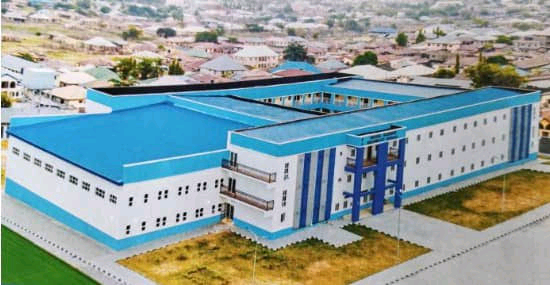
Kogi State has announced that its public schools rank among the best in Nigeria, attributing this to substantial investments in educational infrastructure and student support.
The state Commissioner for Information and Communications, Kingsley Fanwo, made this known on Sunday, stating the government’s commitment to surpassing the UNESCO benchmark for education funding.
Fanwo pointed to flagship projects, such as the GYB Model Science Secondary School in Adankolo, Lokoja, as evidence of the state’s ambition to transform its educational landscape.
Similar projects are underway across the state’s three senatorial districts to provide modern learning environments with state-of-the-art ICT facilities, laboratories, digital libraries, and sports amenities.
The “blue roof revolution,” initiated under the previous administration to modernise primary school facilities, continues under Governor Ahmed Usman Ododo’s leadership.
This initiative has significantly enhanced public confidence in the state’s education system by creating more engaging and supportive learning environments.
Education in Kogi State is free from primary through secondary levels, with the government covering all internal and external examination fees.
At the tertiary level, bursaries are provided to thousands of students, ensuring that financial constraints do not hinder access to quality education.
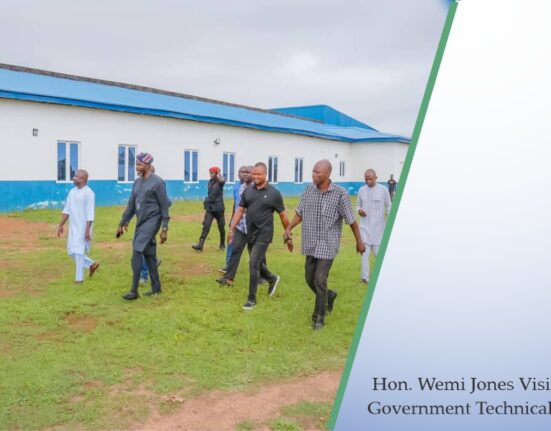
Governor Ododo recently paid an unscheduled visit to the GYB Model Science Secondary School, where he interacted with students and reaffirmed his administration’s commitment to prioritising education.
He assured the students of plans to build hostels and provide a school bus, further enhancing their learning experience.
The state’s investment in education extends to higher institutions, with significant funds allocated for infrastructure development at the newly established Kogi State University in Kabba.
This includes the construction of a Senate building, the Faculty of Science, and student hostels. Additionally, the government has approved N316 million in bursary payments for 8,750 indigenous students in tertiary institutions and allocated over N600 million to cover WAEC fees for 18,734 public school students.
These initiatives are part of a broader strategy to build a knowledge-driven economy and ensure that every child in Kogi State has access to quality education, regardless of their socio-economic background.
Leave feedback about this