
At Community Secondary School, Abejukolo, in Kogi East, the sound of chalk against the blackboard is often drowned by the shuffling of bare feet on dusty floors. Here, in the heart of rural Kogi, learning takes place on cracked cement, with students crouched on the floor, notebooks balanced on their knees, struggling to catch every word.
This grim reality is a stark contrast to the glossy reports from Lokoja, the state capital, where well-furnished classrooms are often showcased as proof of government commitment to education. But beyond the cameras and ribbon-cutting ceremonies lies a tale of decay, neglect, and silent suffering.
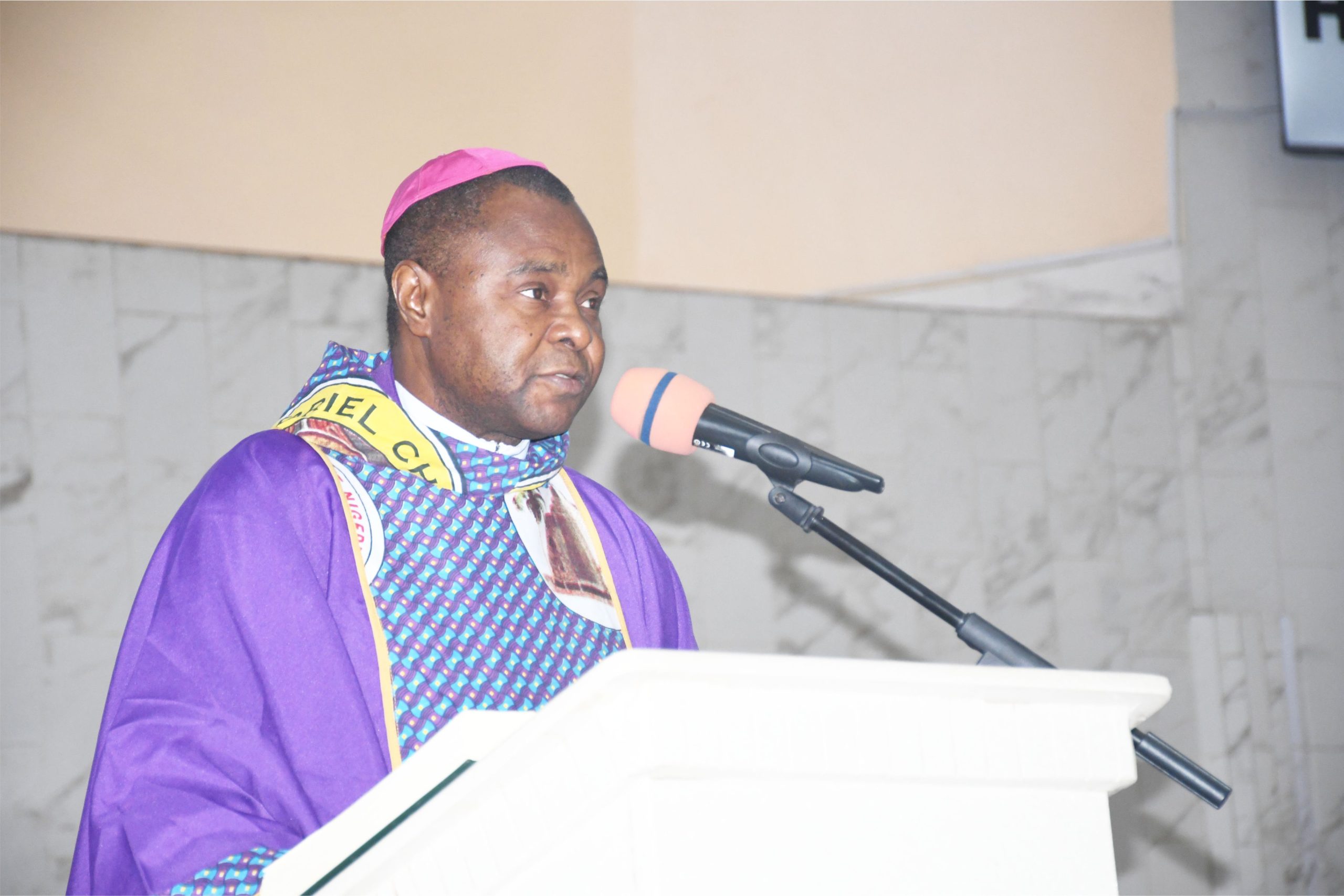
At a recent Chrism Mass at Saint Boniface Cathedral, Idah, the Catholic Bishop of Idah Diocese, Bishop Anthony Ademu Adaji, broke his silence on the matter. His voice, heavy with emotion, painted a picture of rural schools in such disrepair that he questioned the very existence of governance in the state. “Is there still a government in Kogi State?” he asked a gathering of parishioners, his tone laced with frustration.
The bishop lamented that less than 10 per cent of public schools were functional, with Kogi East being the worst hit. “If you visit some government schools in Kogi East and you truly value education, you will weep,” he said.
In Oforachi village, stories abound of SS3 students writing their final examinations while squatting or sitting on the floor, their backs hunched for hours. In some cases, pupils learn under mango trees, with teachers using pieces of plywood balanced on rocks as makeshift desks.
Community leaders said that despite yearly budgets running into billions, rural education has been reduced to a cruel joke. “They show us pictures of beautiful schools in Lokoja, but come to our villages — nothing but ruins,” said Mallam Sule Audu, a retired teacher from Dekina.
The emotional toll is deepening. Many young people now view education with growing disillusionment. For 15-year-old Mariam Ogwu, trekking several kilometres to a school with no chairs, no toilets, and leaking roofs has become her daily struggle. “Sometimes, when it rains, we have to go back home. Our books get wet. We feel abandoned,” she said, tears welling in her eyes.
Education experts argue that the gulf between rural and urban schooling in Kogi is widening dangerously. Dr. Isaac Oladipo, a policy analyst, warned that unless urgent steps are taken, “Kogi risks breeding a generation trapped in illiteracy and poverty, unable to compete in Nigeria’s future economy.”
While Governor Ahmed Ododo has been commended for efforts like regular salary payments, Bishop Adaji and many others insist that paying salaries alone is not enough. “Education and infrastructure must also become priorities,” the bishop said, urging the government to focus less on the ‘showpiece schools’ of Lokoja and more on the forgotten classrooms of Kogi East.
For now, the children of rural Kogi continue to sit on bare floors, dreaming of a better future — one their leaders promised, but which remains painfully out of reach.
States
Kogi’s Forgotten Schools: The Rural Education Crisis No One Talks About
Related Post



Leave feedback about this