

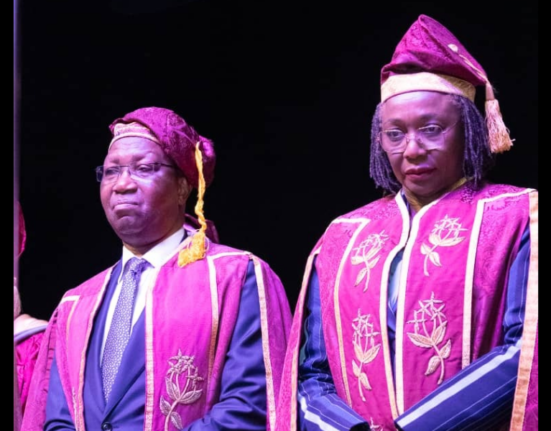
Prof Offiong Offiong, the new VC, University of Calabar (UNICAL)
For many Nigerian students, getting admission into a Nigerian university is more than an academic aspiration or a rite of passage. It is an opportunity to change their lives and those of their families.
However, across the country, that dream is often threatened by a shadow industry: admission racketeering. Talented students with the grades to succeed are turned away, while those who can pay—often beyond the means of ordinary families—slip in through back channels.
At the University of Calabar (UNICAL), this story is set to change. Professor Offiong Offiong, the new Vice-Chancellor, took office promising a complete overhaul of the university’s admissions process. “There will be zero tolerance for indiscipline, including admission racketeering and fraudulent NYSC mobilisation,” he declared at his inauguration. Offiong, an alumnus of UNICAL, is committed to restoring integrity, transparency, and fairness, reactivating the Central Admissions Committee, and ensuring strict adherence to JAMB’s Central Admissions Processing System (CAPS).
The problem is pervasive. JAMB recently revealed that over one million illegal admissions occurred between 2017 and 2020 across multiple institutions, often favouring students who lacked the basic qualifications. Some parents recount painful stories of how, in desperation to secure admission for their children, they have paid middlemen, only for the admissions never to materialise.
On the other hand, hardworking students with limited means have told stories of how they have unfairly lost admission to children whose parents are better positioned. “I worked so hard, stayed up nights to study for exams, and yet I was told someone else got my place because of money,” shares Chinedu, a hopeful medical student from Enugu.
Advocates warn that the stakes go beyond individual disappointment. Admission racketeering erodes trust, fuels inequality, and affects the nation’s future workforce. “When merit is ignored, society pays the price,” says Adaramoye Lenin of the Education Rights Campaign. “We produce graduates ill-prepared for the demands of the world.”
The debate is complex. While ASUU stresses that universities must maintain autonomy over admissions, the voices of students and parents remind us that every corrupt practice is a human story—families stretched thin, dreams deferred, and aspirations crushed.
With Prof. Offiong at the helm, UNICAL aims to be a different story: a university where talent and hard work, not money, open doors. “We need people of goodwill to step forward,” he urges. “Together, we can make UNICAL a beacon of hope, where dreams are earned and not bought.”


Leave feedback about this