

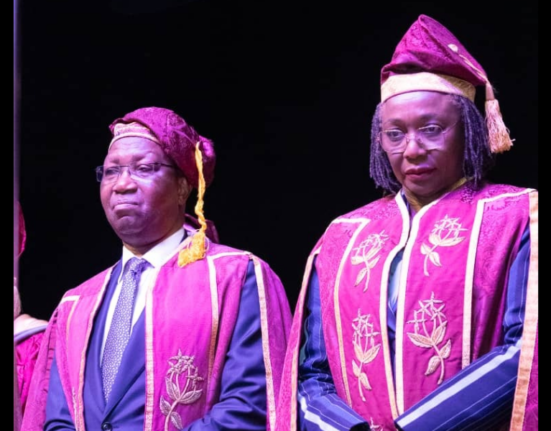
Prof. Abdullahi Yusufu Ribadu (left), NUC Executive Secretary
For many Nigerians, this decision feels like fresh air blowing through a system that has long been suffocated by rot, favouritism, and the worship of titles. In a bid to restore dignity to the nation’s battered higher education sector, the National Universities Commission (NUC) has finally put its foot down—banning the award of honorary doctorate degrees to serving public officials.
The announcement by the Executive Secretary, Professor Abdullahi Yusufu Ribadu, did not come as a surprise to those who have watched Nigeria’s academic culture drift away from genuine scholarship. Nevertheless, for students, lecturers, and ordinary citizens who have silently questioned the growing abuse of academic honours, it felt like a moment of long-awaited justice.
For years, honorary degrees in Nigeria have moved from being a mark of excellence to a symbol of political influence. Stakeholders say the abuse grew worse as unaccredited institutions—popularly called “degree mills”—sprang up both within and outside the country. According to the report submitted to the NUC, no fewer than 32 institutions were operating as honorary degree factories. These include unaccredited foreign universities, unlicensed local institutions, and professional bodies that lack legal authority to award degrees.
This development created a culture in which public officeholders rushed to secure honorary titles, sometimes in exchange for political patronage or financial gifts. Many recipients went further to parade themselves as “Dr,” a practice the NUC says amounts to false representation under Nigerian law.
Many Education analysts have commended the government for this bold step, adding that it aligns the country’s higher educational system with global best practices. For instance, in the United Kingdom, universities rarely award honorary degrees to serving politicians. This is done to protect the schools’ reputations and the certificates they issue. In Canada and Australia, Universities operate under even stricter rules. In these countries, public officials in active service are usually excluded to avoid a conflict of interest. The United States also has strong informal controls, with many universities rejecting political figures to prevent the perception of favouritism.
By enforcing the Keffi Declaration of 2012—which clearly warned against awarding degrees to serving officials—Nigeria is finally returning to a standard many countries adopted decades ago.
University administrators also argue that this move will reduce the commercialisation of academic honours. According to them, when honorary degrees become political souvenirs, the value of earned PhDs is diminished, and the moral authority of universities is weakened.
For many stakeholders, the NUC’s action is not just about banning titles; it is about bringing sanity to the higher education system and rebuilding trust.
If enforcement is taken seriously, experts believe this single decision could help restore credibility to Nigeria’s higher education sector and return honorary degrees to what they were meant to be—a genuine honour, not a transaction.



Leave feedback about this