

Every year, over 1.8 million young Nigerian students take the Unified Tertiary Matriculation Examination (UTME), but only about 30 per cent of them secure admission. The dream of higher education remains out of reach for many, even as new private universities spring up across the country.
The United Nations projects that by 2050, Nigeria will become the world’s third most populous nation, with 399 million people — most of them young and ambitious. Nevertheless, as the population surges, the gates of university education are narrowing.
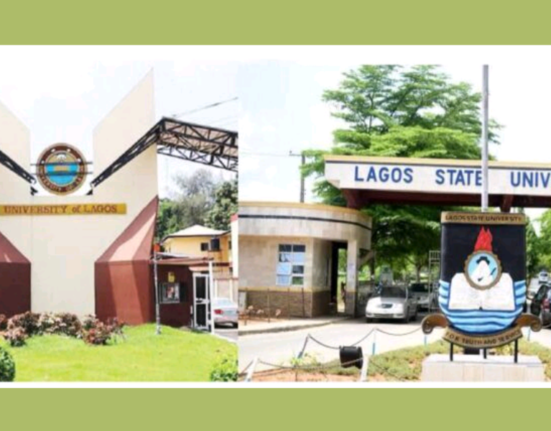
The World Education News and Review (WENR) once described Nigeria’s higher education system as “overburdened” by rapid population growth and limited facilities. Despite having 79 private universities, 48 state universities, and 43 federal universities, millions of qualified students are still left out yearly. So, why haven’t private universities been able to bridge the gap?
Professor Ayodeji Olukoju, Pro-Chancellor of Chrisland University, Abeokuta, says the answer lies in both cost and policy. “Many parents simply cannot afford private university fees,” he explains. “And those schools that strictly obey the NUC’s carrying capacity rule cannot admit beyond their available facilities.”
Carrying capacity — a policy introduced by the National Universities Commission (NUC) — ensures that universities only admit students based on existing infrastructure, including lecture halls, laboratories, and hostel spaces. While the rule helps maintain quality, it also limits access.
Professor Anthony Kola-Olusanya, Deputy Vice-Chancellor of Osun State University, adds that growth in private universities must be gradual. “No university can expand faster than the NUC allows. University development is phased, and it takes time,” he notes.
Still, there is a deeper issue, affordability. Educationists, such as Philip Balogun of the Grace Schools Centre for International Studies, argue that cost remains the biggest barrier. “No private university charges below N350,000 a year, even for the least course. That is beyond the reach of many average families,” he says.
Ironically, the National Open University of Nigeria (NOUN) now admits more students annually than all private universities combined. NUC Executive Secretary, Prof. Abubakar Rasheed, revealed that NOUN enrols over 100,000 students yearly, while the 79 private universities together account for less than six per cent of total university students.
Experts say solving the crisis requires more than just building new universities. Olukoju believes the government has not done enough to support public universities. He insisted that the government must allocate more funds to the public universities, reform outdated curricula, and explore virtual learning to expand access.
Until these important steps are taken, the private universities remain symbols of both progress and paradox, expanding in number, yet still out of reach for millions of bright young minds yearning for a seat in the lecture hall.


Leave feedback about this