
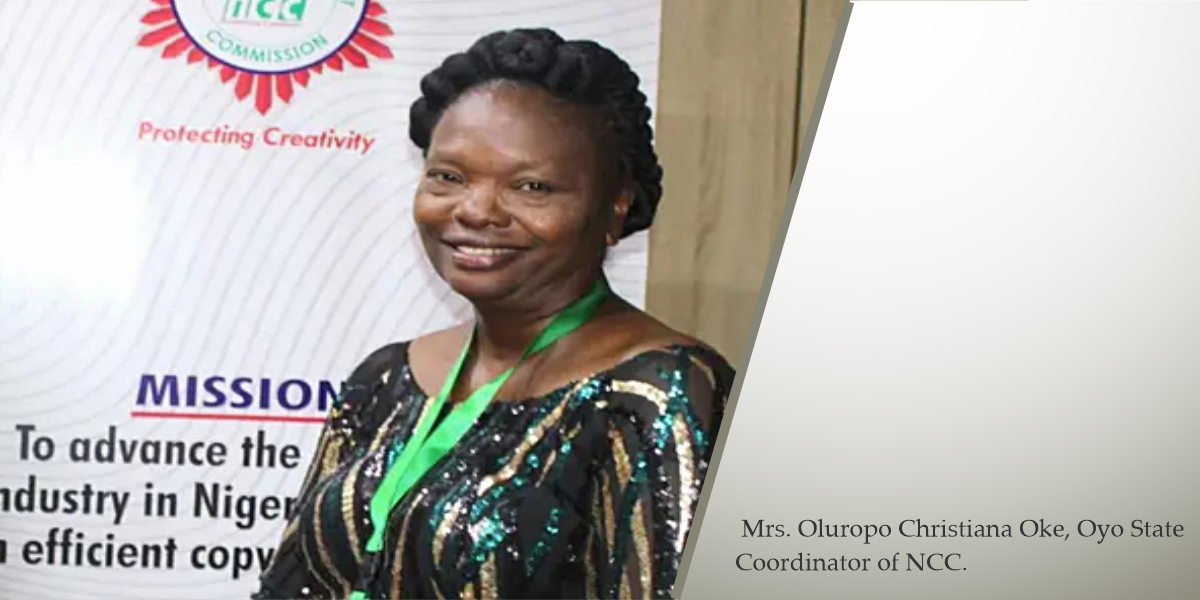
The Nigerian Copyright Commission (NCC) is intensifying its efforts to combat book piracy in Nigeria, and the message is clear: piracy will no longer thrive unchecked. Recently, Ibadan—long seen as a significant hub for pirated books—was the latest stop in this nationwide crackdown
Specifically, on the morning of Saturday, September 20, 2025, NCC operatives, led by the Oyo State Coordinator, Mrs Oluropo Oke, with support from the Civil Defence Corps, stormed bookshops in areas such as Beere, Dugbe, Gbagi, and Agbeni. Popular outlets such as Genesis, God’s Grace, Idera and Blessings were sealed. Several suspects were picked up. Their offence was simple but profound: stocking and selling pirated books.
On the surface, the clampdown on illegal book sellers may appear to be merely an effort to discourage piracy, but it goes beyond that. At its core is something much bigger—protecting Nigeria’s knowledge economy and building a stronger educational sector.
Oke explained that many shops could not even provide proper receipts or records of where they got their books. Some receipts only carried total prices without author names or book titles—clear evidence of shady dealings. She was firm: excuses that publishers did not meet demand cannot justify piracy. “Piracy kills creativity, hurts the economy and promotes substandard books,” she said.
This is not the first time NCC has gone after pirates. Over the last five years, the Commission has relocated from Lagos to Port Harcourt, Enugu, Abuja, and beyond. Containers of pirated books worth hundreds of millions of naira have been seized. In 2021, two containers loaded with over 80,000 pirated books were intercepted at Tin Can Port in Lagos. Just last year, raids in Lagos and Enugu led to seizures worth more than ₦70 million. The pattern is clear—piracy is big business, but NCC is determined to choke it.
The question then is: why does this matter so much to education? The answer lies in the role of books in nation-building. Books are not just paper and ink; they are the foundation of learning. Without them, classrooms are empty shells. Nigeria’s publishing industry contributes at least ₦100 billion to the economy every year, according to the Nigerian Publishers Association. However, this figure could be significantly higher if piracy were reduced.
Every pirated book sold is money stolen from authors, publishers and investors who put in time and resources to create knowledge materials. Piracy discourages writers from writing, publishers from publishing, and investors from investing. In the end, it shortchanges students, teachers and even the larger society. For a country like Nigeria, struggling to lift its education sector, this is too heavy a cost to bear.
That is why NCC’s raids must not be seen as mere police work, but as part of a larger effort to expand the knowledge enterprise. To truly succeed, however, the fight must be backed by a stronger legislative framework. The Copyright Act of 2022 already outlines punishments for piracy, but enforcement must be consistent, and penalties must be more severe. States, like Ondo, have suggested that they can also pass local laws to stiffen sanctions and deter offenders.
At the end of the day, piracy is not just an economic crime; it is a national sabotage. It robs students of quality learning, deprives authors of their work, and hinders the country’s growth. For Nigeria to build a future driven by knowledge, the NCC needs more support, not less—support from government, lawmakers, schools, and even parents. Buying original books may cost more, but it is the price we must all pay for genuine education.


Leave feedback about this