
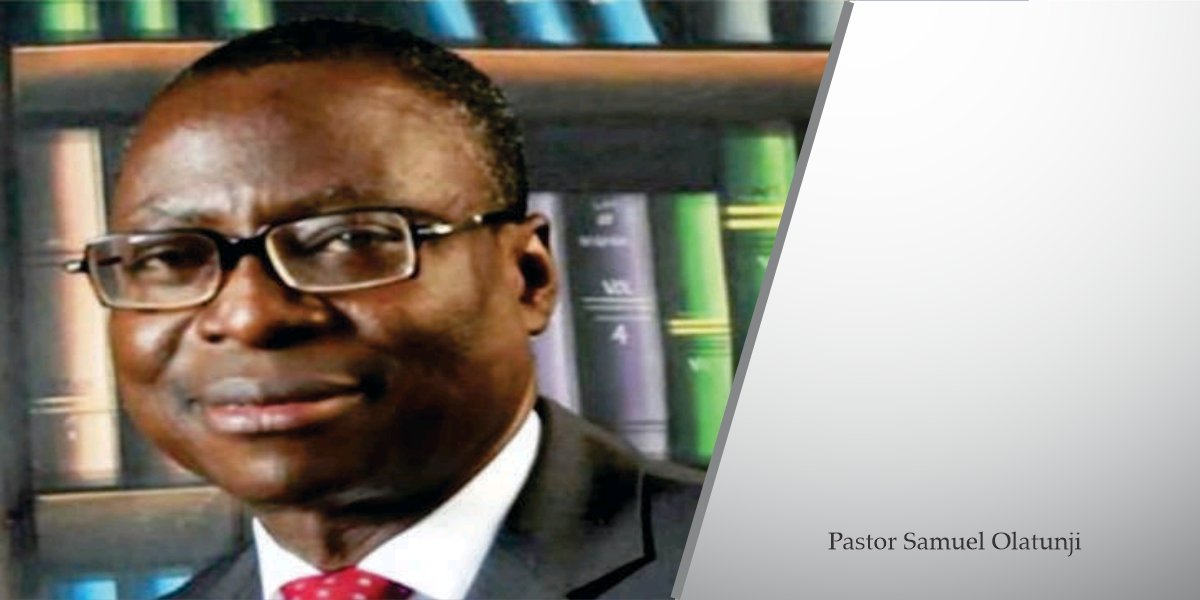
When Pastor Samuel Olatunji, Pro-Chancellor and Chairman of the Governing Council of Trinity University, Lagos, looks back on Nigeria’s education system, his memories are filled with a different kind of society — one where trust, integrity and community were central to daily life.
“In the olden days, traders could leave their goods by the roadside with stones indicating prices,” he recalls. “Buyers picked what they wanted, dropped the money and left. Even if a young child were asked to watch over the goods, nobody would think of kidnapping her or harassing her.”
For Olatunji, education was not just about classrooms or degrees; it was embedded in culture, character and leadership. Today, he says, those values have eroded — and the ripple effect shows in every sector, from politics to agriculture, and most especially in education.
The clergyman’s journey into private education was not born of profit but necessity. “My generation enjoyed quality public schools,” he says. “But we cannot give our children today the kind of education we had then. Some of us stepped in to fill that gap.”
Starting his own schools, however, came with turbulence. The environment was hostile, funding was scarce, and staff were unreliable. “At one point, half of our teachers, including one from my village, resigned on the same day,” he remembers.
In one of the most painful incidents, the school’s security guard betrayed their trust. “While everyone was away at church, he brought a trailer and carted away everything, even the principal’s personal files. These were items people had donated to help us. It was heartbreaking.”
If natural teething problems were not enough, Olatunji insists that government policies made things worse. “Government is the number one enemy of private schools in Nigeria,” he declares. “They frustrate approvals, fail to create an enabling environment, and instead of celebrating success, they place obstacles in the way.”
He dismisses the notion that private institutions exist simply for profit. “If it is so easy, government officials should come and do it themselves. For many of us, it started with our own children — we created schools that our children attended first, before others joined.”
The early years, marked by borrowing, debt, and even pleading with banks for survival, tested his resolve. “We had to go and prostrate before the MD of a bank at one point. It was very rough,” he says.
Today, the situation has improved. The school has grown beyond its rocky beginnings and now serves children from different families, not just his own. For Olatunji, the story of Trinity University and his other schools is less about personal achievement and more about resilience in the face of systemic hostility.
His conclusion is blunt: without integrity in leadership and without government recognising private education as a partner rather than a competitor, Nigeria’s education sector will continue to struggle.

Leave feedback about this