
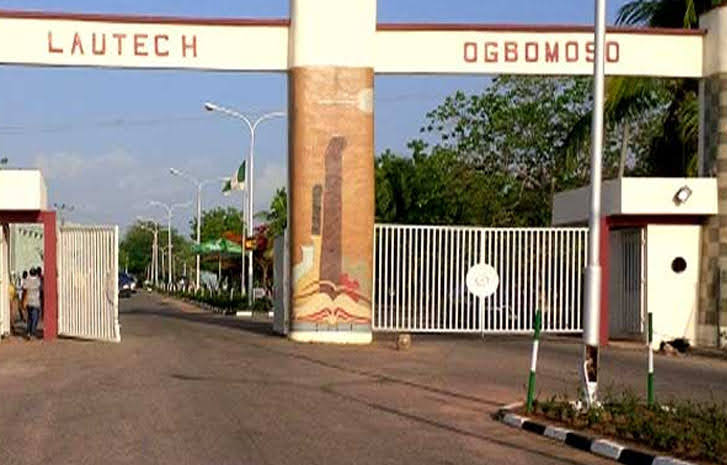
Once known for strike-ridden calendars and ownership tussles between two Southwest states, Ladoke Akintola University of Technology (LAUTECH), Ogbomoso, is writing a new story, one filled with hope, growth, and fresh ambition.
Since November 2020, when the joint ownership of the university was officially resolved, and Oyo State became the sole owner, LAUTECH has been on a steady climb out of uncertainty. The former tug-of-war between the Oyo and Osun governments had plagued the institution for over a decade, often leaving students stranded mid-semester. Nevertheless, today, students and staff speak of a university that is regaining its academic, administrative, and structural glory.
According to the Oyo State Commissioner for Information and Orientation, Dotun Oyelade, the Makinde-led government has already paid ₦5 billion out of the ₦8 billion agreed compensation to Osun. The remaining ₦3 billion is expected to be paid before 2027, when Governor Seyi Makinde’s tenure ends.
However, more than the money, it is the transformation on the ground that tells the whole story.
Before the ownership change, LAUTECH’s reputation suffered badly. Prolonged strikes and unpaid staff salaries pushed the university far down in the National Universities Commission (NUC) rankings. In 2019, it barely made the top 15 state-owned institutions.
Fast forward to 2024, LAUTECH now ranks as the Best State University in Nigeria, according to the latest NUC evaluation. Student enrollment has jumped by over 20%, thanks to a more stable academic calendar and improved facilities. Research output has also increased, especially in engineering, computer science, and agriculture.
“We now have peace of mind,” said Damola Adewale, a final-year engineering student. “Our semesters are no longer dragged for 18 months because of the strike. We are finishing on time and planning.”
One of the major complaints before 2020 was the poor welfare of lecturers and non-teaching staff. Salaries were owed for months. Promotions stalled. Morale was low.
However, under Oyo’s sole ownership, things have changed. Salaries are now paid regularly, promotions are back on track, and the state government has begun recruiting new lecturers to replace those who left during the crisis years.
The physical growth of the university is visible. The Iseyin campus, home to the newly established Faculty of Agriculture and Natural Resources, is undergoing rapid expansion. Just last week, Governor Makinde approved ₦650 million as a take-off grant for the Teaching and Research Farm there. Road networks, health centres, and student hostels are under construction—not only in Iseyin but also across other Oyo-owned institutions.
While some critics argue that the government is investing too much in one school, many others view the revival of LAUTECH as a model for educational reform nationwide.
“This is not just about one university,” said a lecturer who asked not to be named. “It is about how leadership and political will can turn things around. LAUTECH was broken. Now it is bouncing back.”
Indeed, LAUTECH is rising again. Furthermore, this time, the sky might be the beginning.




Leave feedback about this