
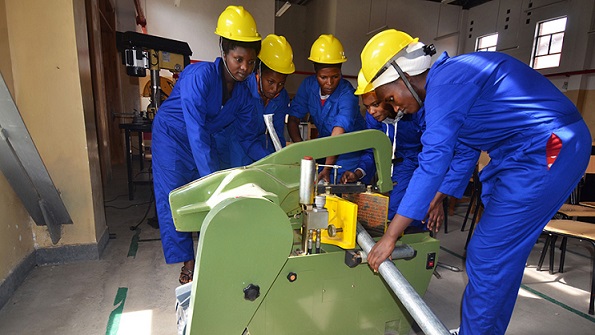
When 24-year-old Sani Ibrahim graduated from a polytechnic in northern Nigeria, he dreamed of working in a factory or setting up his own welding business. But three years later, Sani now rides a commercial motorcycle- popularly known as okada- to make ends meet.
“I was trained to work with machines and fix things, but there is no equipment to practice. No jobs. No tools. No hope,” he said, adjusting his worn-out helmet. His story is the reality of millions of Nigerian youths trapped in a cycle of broken promises, poor education, and rising unemployment.
The long-term neglect of technical and vocational education is at the heart of Nigeria’s worsening job crisis. According to the President of the Academic Staff Union of Universities (ASUU), Prof. Emmanuel Osodeke, Nigeria’s education system is “on the brink of total collapse.” He blames decades of chronic underfunding, lack of infrastructure, and poor policy direction.
“Technical colleges and vocational centres, which should empower our youths with employable skills, have nearly collapsed,” he said during the 23rd National Delegates Conference of ASUU held at the University of Benin. “We are now importing artisans from the Benin Republic and Togo while our youths roam the streets jobless.”
The numbers paint a grim picture. Nigeria’s annual educational budget falls within a range of 6 to 8 per cent, which is far below UNESCO’s recommended 15 to 20 per cent. Without adequate investment, vocational institutions remain shadows of their potential. Many lack working equipment, trained instructors, or even access to electricity.
A walk through the premises of a technical college in Osun State confirms this. The classrooms are empty. Metal workshops are rusty. Students sit under trees, waiting for teachers who rarely come.
“I have not touched any machine since I resumed here,” says Chidera, a 19-year-old student of mechanical technology. “Most of our learning is theory. We copy notes and go home.”
Experts say that this failure to develop practical skills worsens Nigeria’s unemployment crisis. While universities churn out graduates yearly, many leave without the knowledge to thrive in today’s competitive economy.
Former INEC Chairman and ex-ASUU President, Prof. Attahiru Jega, warns that national development will remain a pipe dream without a skilled workforce. “We must stop treating education like a luxury. It is the foundation of every thriving society.”
The government, for its part, insists efforts are being made. A recent announcement of N40 billion was released to ASUU and was greeted with scepticism. Comrade Adewale Adeyanju of the Nigeria Labour Congress referred to it as an “audio allocation” until proven otherwise.
But for youths like Sani, the debate is more than numbers. It is about a future slipping away.
“If Nigeria had invested in skills training, I would be an employer today, not dodging traffic officers on this bike,” he says.
Until Nigeria prioritises technical education, its dream of lifting its youths out of poverty will remain a dream.



Leave feedback about this