
In classrooms across Nigeria, thousands of teachers continue to shape young minds under dimly lit roofs, armed with little more than chalk, dedication, and patience. However, despite their central role in building the nation’s future, many of them still await the fulfilment of promises made to improve their welfare and working conditions.
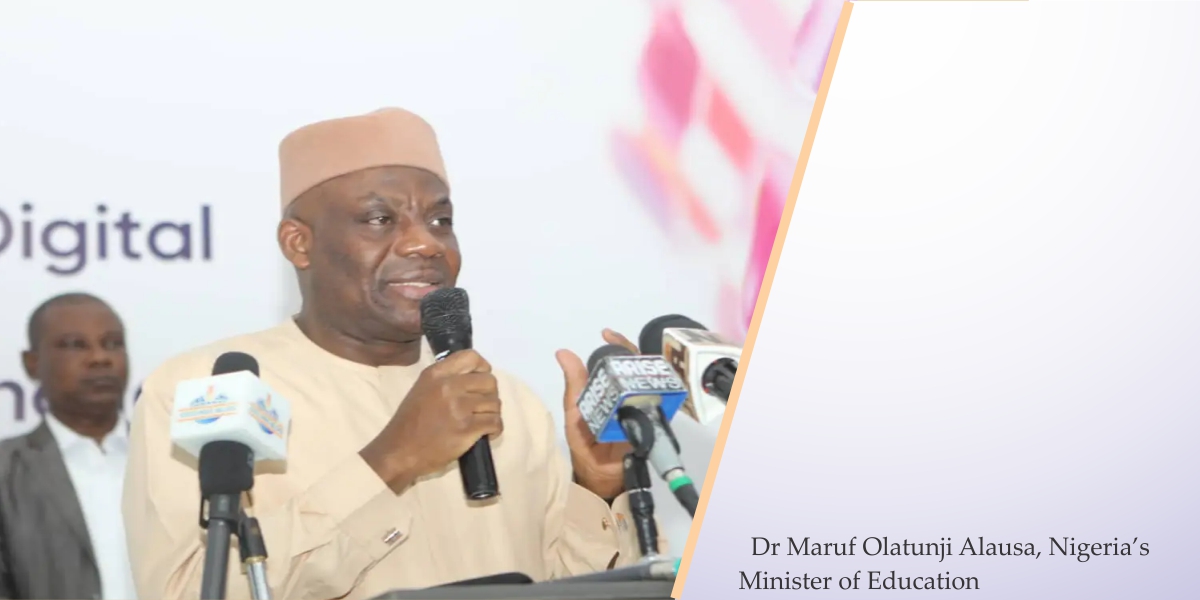
At this year’s World Teachers’ Day, celebrated globally on October 5, Nigeria’s Minister of Education, Dr Maruf Olatunji Alausa, reaffirmed the Federal Government’s commitment to enhancing teachers’ welfare and professional growth. The 2025 theme, “Recasting Teaching as a Collaborative Profession,” called attention to the power of teamwork and shared responsibility in revitalising education. However, beneath the celebrations lies a harsh reality, a widening gap between policy and practice.
According to the Universal Basic Education Commission (UBEC), Nigeria currently has 915,913 teachers serving over 31.7 million pupils in public and private primary schools, a ratio of 35 pupils per teacher, far above UNESCO’s recommended 25:1 ratio. The World Bank ranks Africa among the regions most affected by teacher shortages. At the same time, UNESCO and UNICEF warn that 44 million more teachers are needed globally to meet universal education targets by 2030.
For many Nigerian teachers, the challenge extends beyond numbers. Low pay, delayed salaries, and poor working conditions have pushed countless professionals to the brink. In some private schools, teachers earn as little as ₦30,000 a month, without pensions, health insurance, or basic job security. The Nigeria Labour Congress (NLC) describes this as a form of systemic neglect that has stripped the profession of dignity and discouraged new entrants.
Even reforms meant to address these issues have been unevenly applied. Despite the Harmonised Retirement Age for Teachers Act, 2022, which extended the retirement age to 65 years or 40 years of service, data from the Nigeria Union of Teachers (NUT) shows that 16 states have yet to implement it. Similarly, several states have failed to enact the N70,000 minimum wage approved in July 2024, with 12 states still paying the outdated ₦18,000 minimum wage from 2011.
Beyond wages, recruitment has also stalled. Between 2018 and 2022, 16 states did not recruit a single teacher, further weakening the system.
Government spending tells a similar story. Nigeria’s education budgets, ₦1.54 trillion (6.39%) in 2023 and ₦2.18 trillion (7.9%) in 2024, fall short of UNESCO’s recommended 15–20% allocation for developing nations. Education experts warn that these gaps threaten to erode the quality of teaching and learning nationwide.
As Nigeria joined the world in celebrating its teachers, the event’s message went beyond praise — it was a call to action. To rebuild trust and reposition education, governments at all levels must match words with deeds, ensuring that teachers receive the support they need to inspire the next generation.
Teachers are not merely transmitters of knowledge; they are builders of nations. Without them, the promise of a brighter future for Nigeria will remain just that, a promise.
Leave feedback about this