
The National Agency for the Prohibition of Trafficking in Persons (NAPTIP) has called on secondary school principals in Ogun State to step into a more active role as frontline defenders in the fight against human trafficking, particularly involving school-age children.
At a two-day training session held in Abeokuta on Thursday, NAPTIP Director General, Binta Bello, said schools have become critical intervention points in states with high trafficking prevalence. Represented by the agency’s Director of Research and Programme Development, Josiah Emerole, she identified Ogun as one of the most affected states, citing both internal and cross-border trafficking as persistent threats.
“Human trafficking is the second most lucrative transnational organised crime globally after drug trafficking, and many of the victims are children, some of whom are already in your schools. You may not have recognised them before, but after this training, you will be equipped to identify and protect them,” Bello told the school heads.
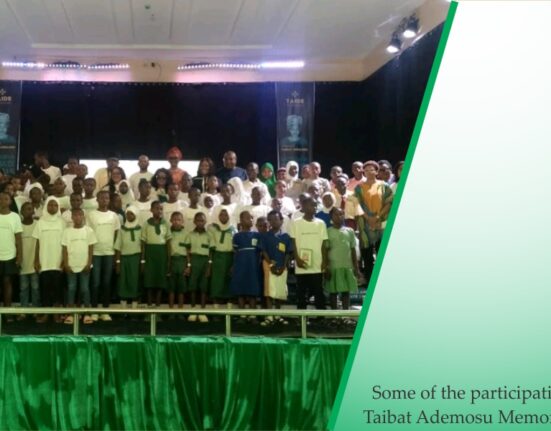
The workshop brought together 50 principals, who also coordinate Anti-Trafficking Vanguard Clubs in their schools, under the School Anti-Trafficking Education and Advocacy Project (STEAP). The project is supported by the International Centre for Migration Policy Development (ICMPD) and funded by the Kingdom of the Netherlands. Bello described trafficking as a growing criminal enterprise, generating an estimated $150 billion in illicit revenue globally every year. She noted that in Ogun State, some children are trafficked into hard labour in quarries and other hazardous work environments under the guise of internal migration. “We are asking you, as school leaders, to use your platforms to spread awareness, intervene early, and create safe spaces where children can report exploitation,” she said.
Speaking on behalf of ICMPD, Rhoda Dia-Johnson, Project Manager for STEAP, said the role of educators has expanded beyond the classroom. “As coordinators of anti-trafficking clubs, you are not just teaching—you are now first responders in the protection of children’s rights,” she said. She urged principals to foster trust and establish systems within schools that enable students to speak up about abuse or suspicious circumstances.
The Ogun State Commissioner for Education, Science and Technology, Prof. Abayomi Arigbabu, reaffirmed the state government’s commitment to tackling trafficking through education-based interventions. Represented by the Director of Education Support Services, Akinola Okereafor, he noted that Ogun State has begun implementing Safe School Child Protection Policies and a Psychosocial Support Framework to address emerging risks. “Schools must be more than academic institutions—they must function as protective environments. We expect principals to detect signs of distress or exploitation early and act swiftly,” Arigbabu said.
The training concluded with a renewed call for collaboration among government agencies, civil society, and the education sector to build stronger early-warning systems against trafficking and to address its root causes at the community level.



Leave feedback about this