
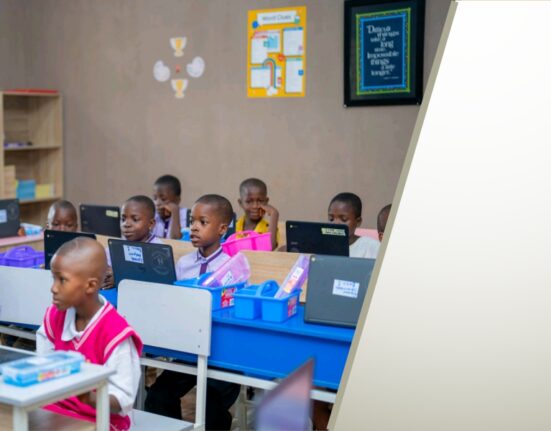
Standard Bearers School (SBS), in collaboration with the iAfrica Cloud School Foundation, has launched EduLab 360, a free phonics and literacy programme designed to combat Nigeria’s literacy challenges. Set to go live on YouTube from August 1, 2025, the initiative targets both children and adults with accessible, quality educational content.
EduLab 360 was officially unveiled during Waloyo: The Musical Voyage, a vibrant showcase of music and education held at the Alliance Française in Lagos. Speaking at the event, SBS founder Modupe Adeyinka-Oni described the programme as a “gift to Nigeria” and a significant step toward closing the country’s educational gap.
“We believe in Nigeria, and we believe every child should have access to quality education. That is why we started the iAfrica Cloud School Foundation — to bridge the education gap and show what is possible when we invest in our children,” Adeyinka-Oni said. The programme is designed to teach learners of all ages how to read, write, and communicate effectively within nine months, entirely free of charge. Adeyinka-Oni emphasised that EduLab 360 is not just for children, but also for adults, second-chance learners, and underserved communities.
“All you need is a laptop or smartphone. Gather learners in a cluster, play the videos, and in nine months, they will be reading. We want to eliminate gatekeepers and empower women in places like Makoko. We want to reduce the number of beggars. This is how we start — through literacy,” she explained. Highlighting SBS’s inclusive model, Adeyinka-Oni noted that several children who performed at the event have special needs. “At Standard Bearers School, you would not believe that some of today’s performers have special needs. That is how inclusive we are. We build children for life.”
In addition to empowering learners, EduLab 360 is also designed as a training tool for teachers, who can model lessons from the expert educators featured in the videos. The foundation plans to expand the platform to include foundational numeracy and eventually a complete K–12 curriculum. “So far, we have self-funded everything. However, we welcome partners — NGOs, individuals, government agencies, who see the value in this and want to help transform Nigeria,” she said. She also called on the government to promote the programme in schools, noting that many people have smartphones but do not realise they can use them to learn.
Expressing hope for a measurable impact, Adeyinka-Oni said, “In five years, we hope EduLab 360 will have reduced illiteracy in Nigeria by at least 30 per cent. The problem of Nigeria today is not just the government’s. It is all of us. Moreover, we all need to get involved if we want to make Nigeria great again.” The launch marked a significant moment in grassroots-driven education reform, placing powerful learning tools directly in the hands of the people to unlock a brighter future.


Leave feedback about this