
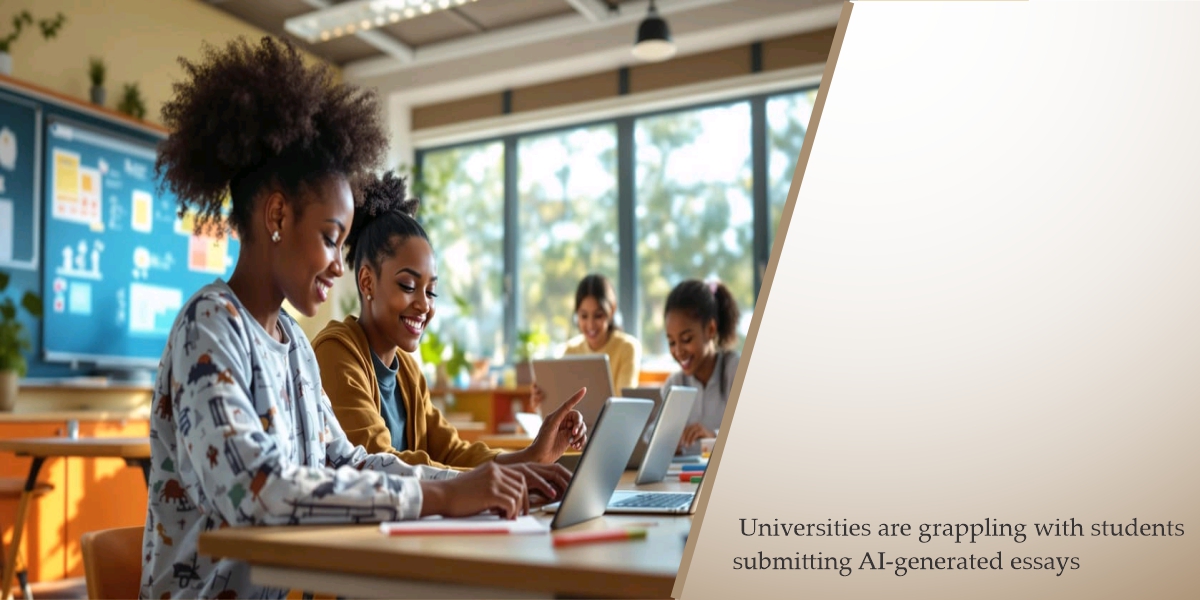
Artificial intelligence (AI) tools are rapidly becoming an integral part of everyday life. Whether it involves helping office workers draft emails or creating slideshows for busy scientists. In education, however, their growing use is sparking intense debate: are these tools improving learning, or are they quietly creating bigger problems for teachers and students?
Across Europe, America and Asia, universities are grappling with students submitting AI-generated essays, while teachers struggle to distinguish genuine work from machine-written text. Nigeria and other African countries are not left out, as students are also discovering ways to use tools like ChatGPT, Copilot, and DeepSeek to lighten their academic workload.
The Burden of Trust
For lecturers already weighed down by marking and assessments, AI appears to offer relief. “AI can process data and summarise information, but it cannot provide the depth and creativity that real scholarship demands,” says David Waldron, an associate professor at Federation University in Australia.
However, the growing reliance on AI has led to a parallel rise in AI detection tools such as ZeroGPT and Scribbr. Unfortunately, these detectors are far from perfect. A British parent recently shared how her daughter’s handwritten A-Level essay, when checked online, was wrongly flagged as AI-generated. Similar complaints have been made by students in the United States and South Africa, raising concerns that honest learners may be unfairly penalised.
“This is dangerous,” warns Dr Chinyere Okeke, an education consultant in Lagos. “When good essays are marked as fake, we discourage students who work hard. It could also push them to lower the quality of their writing just to beat the system.”
An Arms Race in the Classroom
The situation is now being described as a digital “arms race.” Students are using multiple AI tools to disguise their work, while universities invest in even more advanced detectors. However, the detectors themselves often fail, as they cannot explain how they arrive at their conclusions.
In Nigeria, where internet access is inconsistent and many schools still depend on handwritten examinations, some teachers are calling for a return to strictly invigilated, paper-based assessments. “We may have to go back to the basics,” argues Professor Musa Ibrahim of Ahmadu Bello University. “Or else, we risk producing graduates who cannot defend their knowledge outside the classroom.”
Global Concerns, Local Lessons
Beyond concerns about plagiarism, AI raises broader issues. In the UK, for instance, reports show that AI recruiting software once rejected applicants based on gender and age, exposing the bias in these systems. For education, this raises concerns about fairness and data security. For instance, uploaded essays may be fed into AI models without the authorisation of students or institutions.
Countries like Finland are already experimenting with oral examinations and presentations to test students’ knowledge. Nigerian experts believe similar reforms are urgently needed. “Instead of fighting AI, we should adapt,” says Okeke. “Ask students to defend their essays before a panel. That way, the machine can assist in writing, but the human mind must still lead.
The Road Ahead
As AI advances faster than regulation, the risks are real: unfair plagiarism charges, overreliance on flawed detection tools, and potential data misuse. Still, the technology also holds promise if properly guided.
“The challenge is not to ban AI,” concludes Waldron, “but to teach students how to use it critically and responsibly.”
For Nigeria and much of Africa, where traditional learning methods remain strong, the task is to blend innovation with integrity—ensuring that technology becomes a partner in education, not a replacement for it.

Leave feedback about this