
The Federal Government has taken a significant step toward making Nigerian classrooms more inclusive for children with disabilities. It has directed all teacher training institutions across the country to include sign language education in their programmes.
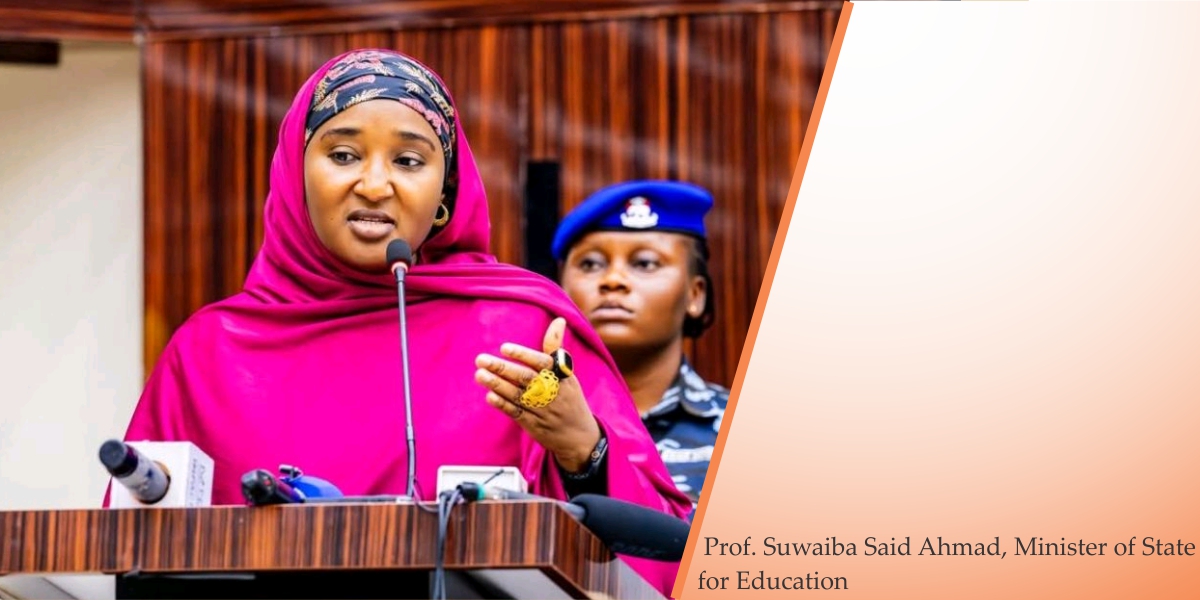
The Minister of State for Education, Prof. Suwaiba Said Ahmad, announced the directive during the 2025 International Day of the Girl Child celebration in Abuja. The event, themed “Lead a Change: Learn Sign Language Today,” focused on promoting equal access to education for all children, especially girls living with disabilities.
According to Prof. Ahmad, the move is part of efforts to ensure that no child is left behind. “Sign language is a bridge, not a barrier,” she said. “We must train more interpreters, integrate sign language into teacher education, and equip classrooms with visual and gestural tools that enable communication.”
She added that the ministry, in partnership with the Universal Basic Education Commission (UBEC), is working to create classrooms that support children with hearing impairments.
UBEC Executive Secretary, Dr Aisha Garba, also described sign language instruction as a national priority, saying that no girl should “suffer in silence.” She noted that UBEC is collaborating with stakeholders to improve school infrastructure, teacher training, and child protection systems.
Experts say the government’s new policy shows real progress in promoting inclusive education, which means giving all children, regardless of disability, equal access to quality education in mainstream schools.
UK-based education expert and author, Kola Okolo, explained that inclusive education is not about separating students with special needs but about helping them learn alongside others. “Equality means giving everyone the same thing, but equity means giving each child what they actually need to succeed,” he said. “Children are different. They learn in different ways. So, teachers must meet those different needs.”
Kola’s recently published book, No Child is Dull!, captures this philosophy perfectly. The book answers long-standing questions about how teachers can support children with special needs and help them achieve their full potential. It also provides simple strategies to help teachers and parents identify learning barriers and offer practical solutions.
The book highlights four key groups — students with disabilities, children at risk (like nomadic or almajiri children), gifted and talented learners, and the resources teachers need to support them.
Kola, an experienced school leader in the UK, believes that once teachers understand how to meet each child’s learning needs, every student will thrive. “No child is truly dull,” he said. “They only need the right support to shine.”
With the new federal directive and educational resources like No Child is Dull!, Nigeria may finally be on the path to building schools where every child, no matter their disability, truly belongs.

Leave feedback about this