

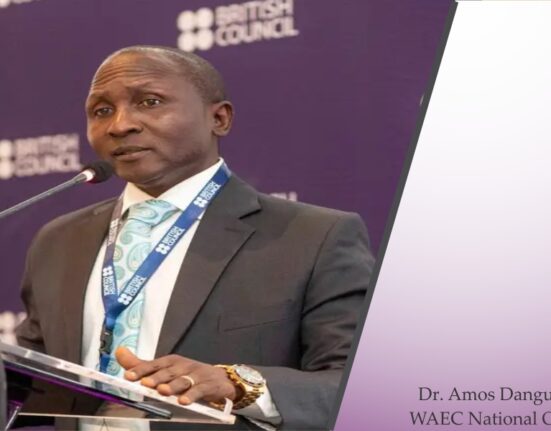
When the Federal Government declared that by 2026 all WAEC and NECO examinations would go digital, Education Minister Tunji Alausa hailed it as a “historic milestone” to boost certificate credibility and prepare Nigerian youths for a knowledge-driven economy. WAEC’s head, Dr Amos Dangut, added that pilot runs since 2024 had shown “significant progress,” insisting: “We have conducted five examinations already… by 2026, deployment will be massive.” However, in states across Nigeria, optimism is quickly met with doubt.
In Lagos, a teacher scoffed: “Our school does not have computers. How will students write theory papers? And what about electricity?” The NUT chairman, Akintoye Hassan, warned: “During the last WAEC English paper, students used candles and phone torches. With no power, CBT becomes a fluke.”
In Ondo South, where some communities have lacked electricity for a decade, PTA official Dr Ademola Ekundayo said: “Good as CBT is, I do not think the time is ripe. Facilities are not there.”
In Benue, an education officer explained: “Many rural students only see computers when they travel to town for JAMB. CBT will not work in such schools.”
Concerns echoed in Rivers, where a principal in Bodo City admitted: “No school in Ogoni has such facilities except one built by Shell.” In Enugu, private school leaders branded the policy “counterproductive” and “ill-timed.”
Even in Kaduna, where government officials praised ICT readiness, Pastor Emmanuel Olorunmagba countered: “WAEC and NECO are not fully multiple-choice. How will essays and practicals be handled?”
For now, Abuja’s digital dream collides with powerless villages, schools without desktops, and students still struggling with basic computer literacy. Between ambition and reality, 2026 may prove less a milestone and more a mirage.




Leave feedback about this