
For many years, industrial strikes have plagued Nigeria’s public universities and polytechnics, disrupting academic calendars and causing students to remain in school longer than necessary. These strikes, often caused by poor funding, bad working conditions, and policy disagreements, have cost the education system dearly. Nevertheless, while many look only to the government for solutions, a quiet but powerful force is stepping in to help keep the peace—TETFund.
Traditionally known as a funding agency responsible for building lecture halls, hostels, and laboratories across campuses, the Tertiary Education Trust Fund (TETFund) is now wearing a new hat, that of a mediator.
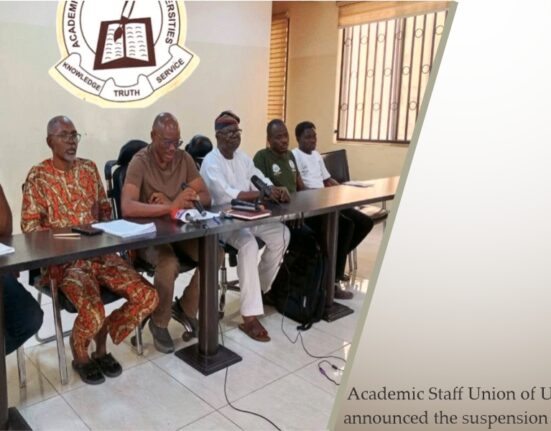
Under the leadership of its Executive Secretary, Arc. Sonny Echono of TETFund has gone beyond bricks and mortar. The agency is now engaged in regular dialogue with various staff unions of Nigerian tertiary institutions, including ASUU, ASUP, COEASU, SSANU, NASU, and others. These discussions, often behind closed doors, aim to prevent the very strikes that bring academic activities to a halt.
Rather than wait until things boil over, Echono believes in proactive engagement. In his words, “One of the keys to solving our problems is constant dialogue. We must sit together often to understand our challenges and work out solutions that work for everyone.”
This approach is making a difference. Over the past two years, Nigeria has seen a decline in the frequency and duration of industrial actions in many public institutions. TETFund’s role in creating a neutral platform where union leaders and school management can discuss issues has been widely praised by education watchers.
The Fund also uses these engagements to listen—listen—to the issues affecting academic and non-academic staff alike. By doing so, TETFund has positioned itself not only as a provider of funds but also as a friend to the system.
Analysts say this is a smart move. “You can pour money into a broken system and still get nothing,” said Dr Ruth Ikenna, an education policy expert. “But when you fix relationships and encourage openness, then you build a system that can sustain growth.”
TETFund still sticks to its core mandate—rehabilitating and supporting infrastructure in public tertiary institutions. However, now, they are also helping to keep classrooms open by preventing conflicts before they escalate.
This new role aligns with global calls for innovation in education management. As the world faces challenges such as climate change, technological disruption, and job scarcity, Nigeria must build strong and stable institutions. Moreover, it begins with peace on campus.
For Nigeria’s students—who bear the brunt of every strike—this shift could mean the chance to graduate on time and chase their dreams without interruption.
TETFund is proving that fixing education is not just about cement and steel. Sometimes, it is about talking, listening, and building trust. In today’s Nigeria, that might be the most valuable infrastructure of all.





Leave feedback about this